




Breast Augmentation Specialists in Cleveland
Also Serving Independence & Westlake, OH
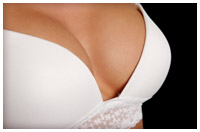 Breast augmentation, technically known as augmentation mammoplasty, is a surgical procedure to enhance the size and shape of a woman's breast, enhancing the body contour of a woman who, for personal reasons, feels her breast size is too small; to correct a reduction in breast volume after pregnancy; to balance a difference in breast size; or as a reconstructive technique following breast surgery.
By inserting an implant behind each breast, Dr. Picha and Dr. Raj, renowned Cleveland breast augmentation surgeons, are able to increase a woman's bustline by one or more bra cup sizes. A breast implant is a silicone shell filled with either silicone gel or a salt-water solution known as saline. Because of safety of concerns, the Food and Drug Administration (FDA) removed silicone gel-filled implants from the market in the 1990s. However, these restrictions were lifted in 2006, and silicone implants are now available to women age 22 and older.
Breast Implant Procedure Details
The method of inserting and positioning your implant will depend on your anatomy and your Cleveland breast augmentation surgeon's recommendation. The incision can be made in the crease where the breast meets the chest, around the areola (the dark skin surrounding the nipple), or in the armpit. Every effort will be made to ensure that the incision is placed so resulting scars will be as inconspicuous as possible.
- Procedure: Enhance the size of breasts using inflatable implants filled with saline or implants filled with silicone gel.
- Length: 1 to 2 hours.
- Anesthesia: Local with sedation, or general.
- In/Outpatient: Usually outpatient.
- Side Effects: Temporary soreness, swelling, change in nipple sensation, bruising. Breast sensitive to stimulation for a few weeks.
- Risks: Lack of implant permanence – surgical removal or replacement of the implants may be required to treat problems, including deflation; the formation of scar tissue around the implant (capsular contracture), which may cause the breast to feel tight or hard; bleeding or infection. Increase or decrease in sensitivity of nipples or breast skin, occasionally permanent.
- Recovery: Back to work: 1 to 2 weeks. Physical contact with breasts: 3 to 4 weeks. Fading of scars: several months to a year or more.
- Duration of Results: Variable. Implants may require removal or replacement.
Schedule your Consultation for Breast Augmentation in Cleveland
To learn more about breast augmentation and to schedule a consultation with Dr. Picha and Dr. Raj, contact Western Reserve Plastic Surgery today.
In addition to breast augmentation, the talented cosmetic surgery experts also provide top-quality care for blepharoplasty, breast lift, breast reduction and liposuction patients. Drawing upon years of experience, the highly skilled Cleveland plastic surgery specialists can create remarkable, natural-looking results that truly enhance their patients’ appearance.